When Is It Time for Aged Care? (Signs You Shouldn’t Ignore)
Apr 28, 2026
There’s a moment that tends to sneak up on you.
Not dramatic. Not urgent. Just a quiet shift from “they’re fine” to “hmm… something’s changed.”
For me, it was little things with Mum. She’d always been incredibly organised — the kind of person who had everyone else sorted. Then suddenly, she was missing appointments. Telling me the same story twice in one phone call. Laughing it off… and I found myself laughing too, but also filing it away somewhere in the back of my mind.
If you’re here, I imagine you’re feeling something similar. Not panic — but not total ease either.
The early signs many families notice
Aged care decisions rarely begin with a big moment. They build slowly, often quietly:
- Increasing forgetfulness or confusion
- Difficulty managing medications
- Changes in hygiene or home upkeep
- Reduced mobility or a fall (even a “small” one)
- Social withdrawal
- Bills or appointments slipping
- You becoming more involved than you used to be
With Mum, it wasn’t one sign — it was the accumulation. The slow realisation that I was stepping in more and more, without really noticing when that started.
The part no one really tells you
Most families wait for a crisis.
A fall. A hospital admission. A moment where the decision is suddenly made for you.
And I get it — because until something feels “serious enough,” it’s hard to act.
But what I wish I’d known earlier is this:
You don’t need to wait for things to get worse to start getting support.
What helps in this in-between stage
You don’t need a full plan yet. Just a gentle start:
- Notice patterns, not one-off moments
- Start gathering key information (health, medications, finances)
- Open small conversations (they don’t need to be perfect)
- Learn what support actually exists
Even understanding your options can bring a surprising sense of calm.
Edwina
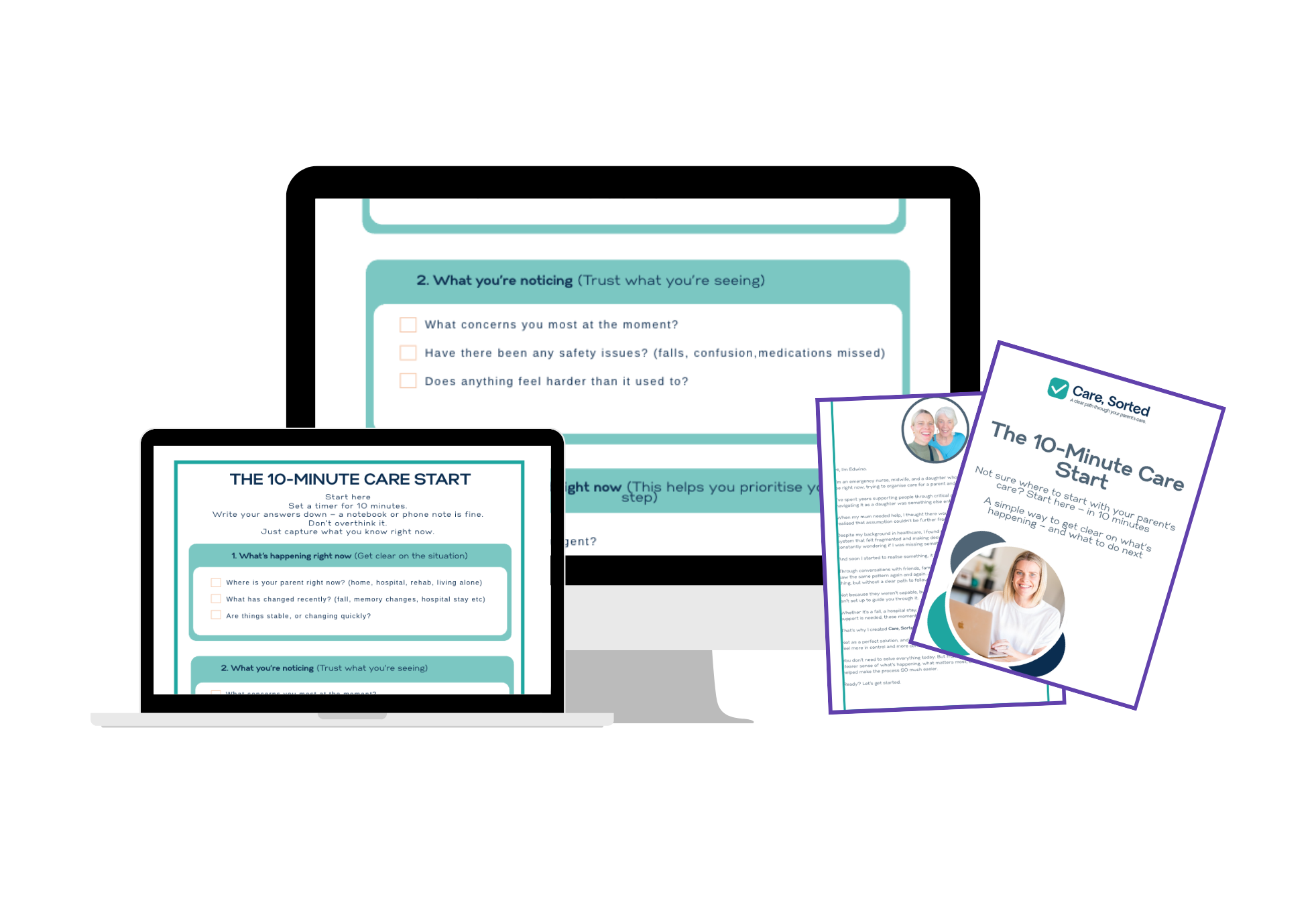
If you’re noticing these signs, start with my 10-Minute Calm Start Checklist — it will help you take the first step without overwhelm.